SAFE-FLEX INSIGHTS
Why Your Cheap Standing Desk Mat Is Killing Your Back
That budget standing desk mat might be making things worse. Here's why thin foam mats cause more fatigue, what happens when they compress, and what actually works.
- anti-fatigue
- standing desk
- stand-safe
- home office
- back pain
You Bought the Desk. You Bought the Mat. Your Back Still Hurts.
You did everything right. You invested in a standing desk to escape the health risks of sitting all day. You bought a standing desk mat from Amazon because every “best standing desk setup” article says you need one. It felt fine for the first few weeks.
Now, three months in, your lower back aches by mid-afternoon. Your feet are sore. You’re sitting down more than you planned to. And you’re starting to wonder whether standing desks are actually overrated.
They’re not. Your mat is.
What’s Actually Happening Under Your Feet
Most standing desk mats sold online cost £20-40 and are made from polyurethane foam or EVA (ethylene-vinyl acetate — the same material used in flip-flops and yoga mats). These materials share a critical flaw: they weren’t designed for sustained weight bearing.
Here’s the sequence:
Weeks 1-4: The mat feels cushioned and comfortable. The foam cells are intact, distributing your weight and absorbing micro-impacts as you shift position. Your body is happy.
Weeks 4-12: The foam cells in your primary standing area begin to collapse. You might not notice visually, but the cushioning is measurably reduced. Your feet start to feel the hard floor beneath. Your muscles work harder to compensate.
Months 3-6: The mat is visibly compressed where you stand. Press your thumb into the worn area versus a fresh area — the worn spot barely springs back. You’re now standing on what is effectively a thin sheet of dead foam over a hard floor.
Months 6-12: The mat is functionally useless for anti-fatigue purposes. Your feet, legs, and back are absorbing the same impact they would on bare floor, but you think you’re protected because you’re “on a mat.”
This last point is the real problem. A compressed mat creates a false sense of security. You think you have protection, so you don’t address the actual issue.
Why This Causes Back Pain
Standing on a hard surface — whether it’s bare floor or a compressed mat — forces your body into a specific stress pattern:
Static muscle loading
When you stand still, the muscles in your calves, thighs, hips, and lower back contract continuously to maintain your upright posture. Unlike walking, where muscles alternate between contraction and relaxation, standing loads the same muscles without relief.
A proper anti-fatigue mat introduces slight instability that forces constant micro-adjustments in posture. These small movements cycle different muscle groups and promote blood flow. A compressed mat doesn’t do this — it’s as stable (and as unforgiving) as the floor beneath it.
Impact accumulation
Every shift of weight, every reach for your keyboard, every small movement creates a micro-impact that travels up through your feet, ankles, knees, and into your spine. On a cushioned surface, these impacts are absorbed. On a hard surface, your body absorbs them — specifically, the discs and joints in your lower back.
Over an 8-hour day, this accumulates into significant strain. Over weeks and months, it manifests as chronic lower back discomfort.
Compensatory posture
When your feet hurt, you unconsciously shift your posture to reduce foot pressure. This usually means leaning, shifting weight to one side, or subtly bending forward. All of these compensations load your lower back asymmetrically, accelerating fatigue and discomfort.
The Thickness Myth
“Just buy a thicker mat” is common advice. But thickness alone doesn’t solve the problem.
A 20mm mat made from cheap foam will compress just as fast as a 10mm mat — it just starts from a better position. The critical factor isn’t how thick the mat is on day one; it’s how thick it remains after months of daily use.
Industrial-grade anti-fatigue materials maintain their rated thickness and cushioning properties because they’re formulated for sustained loading. The materials used in factory floor mats — where workers stand 8-12 hours daily — are fundamentally different from the foams used in consumer products.
What to Look For Instead
If your current mat has visible compression marks, feels thin where you stand, or simply doesn’t spring back when pressed, it’s time for a replacement. Here’s what actually works:
Material over marketing
Ignore marketing terms like “premium foam” or “memory foam comfort.” Look for mats that specify industrial-grade materials. The technology that keeps factory workers comfortable for 8+ hours is the same technology that will keep you comfortable at your desk.
Weight as a quality indicator
Good anti-fatigue mats are heavy. A mat weighing 5-6kg uses dense, durable materials that resist compression. A mat weighing 0.5-1kg is lightweight foam that will flatten. Weight is one of the most reliable quick indicators of mat quality.
15-20mm of the right material
Thickness matters, but only if the material can maintain it. 20mm of industrial-grade compound will outlast 30mm of consumer foam. The sweet spot for standing desk use is 15-20mm of quality material.
Bevelled edges
Cheap mats curl at the edges after a few months, creating trip hazards. Quality mats have bevelled edges that stay flat and allow smooth transitions for desk chairs.
The Industrial Solution
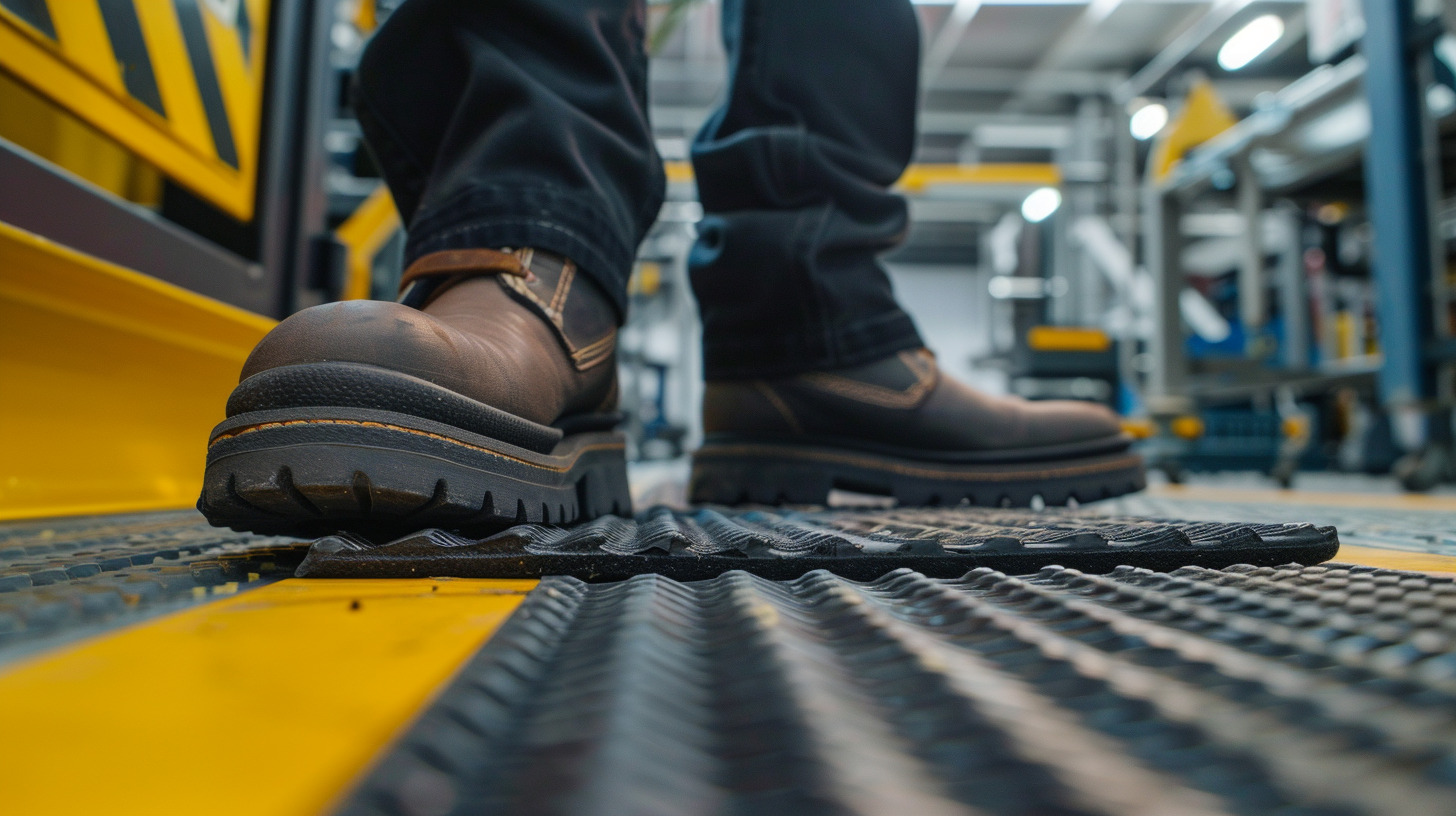
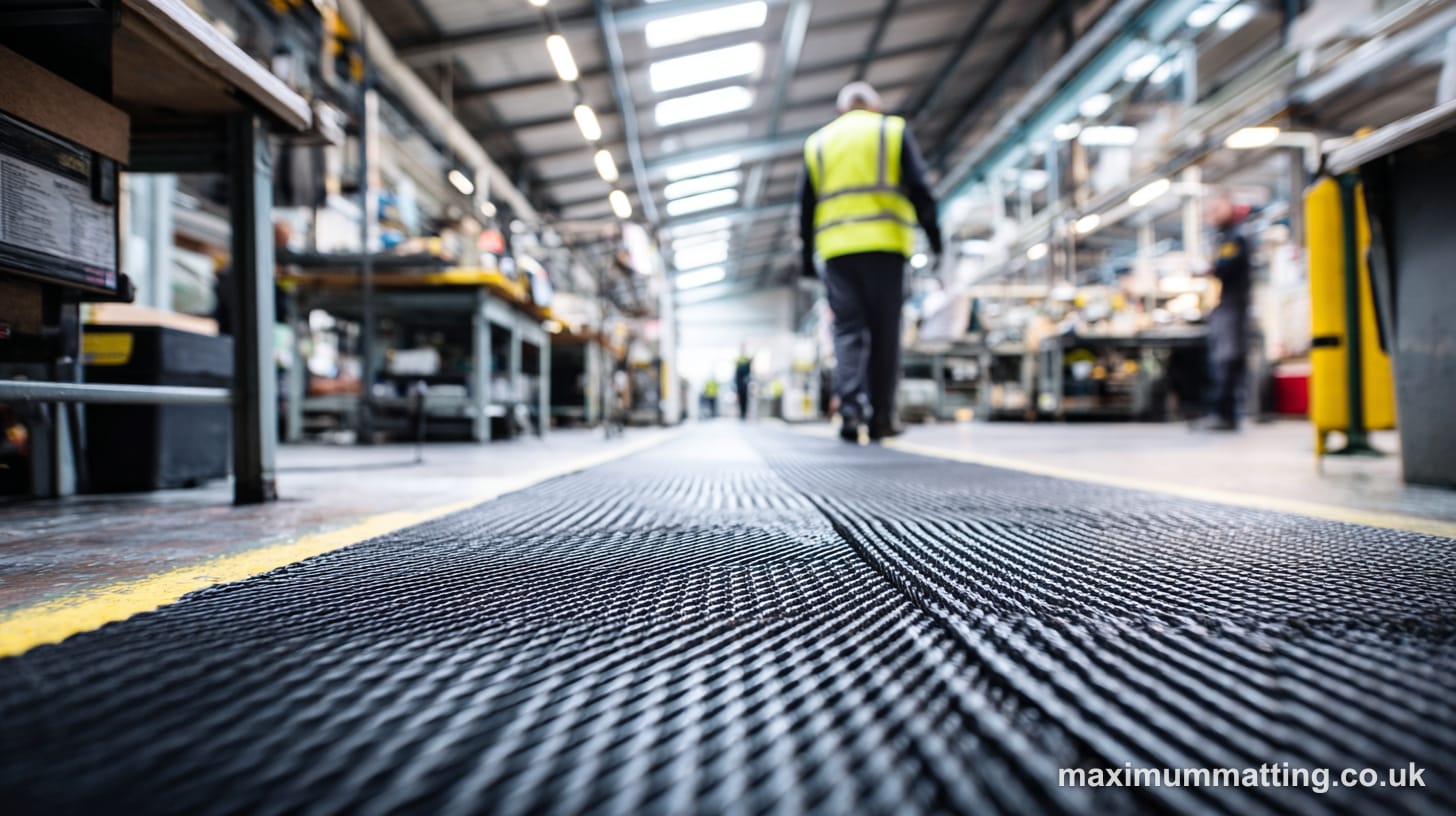
The irony is that the standing fatigue problem was solved decades ago — just not for home offices. Manufacturing facilities worldwide use anti-fatigue mats that keep workers comfortable through shifts far longer than any home office workday.
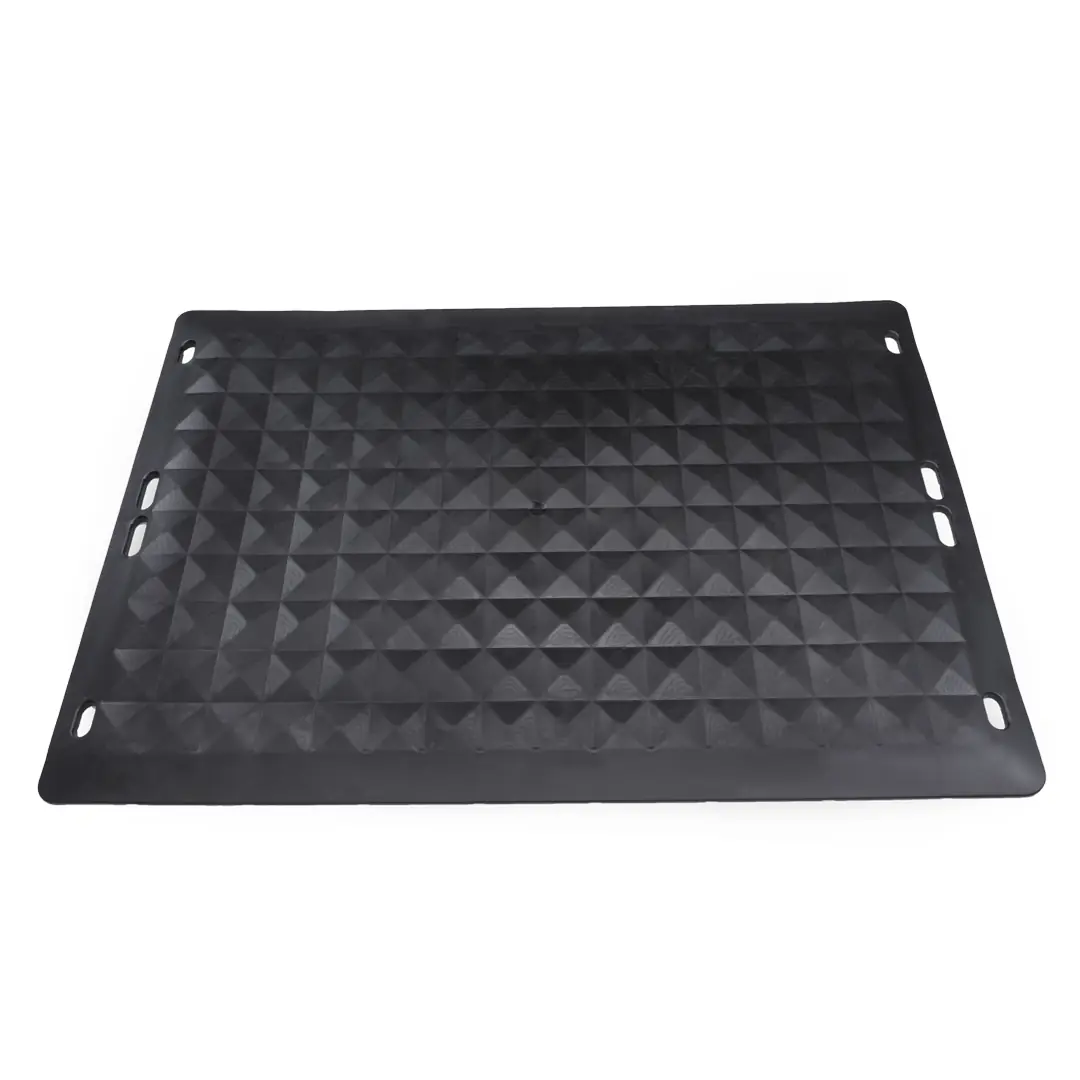
Products like Stand-Safe bring this industrial technology to a home office format: 20mm thickness, 6.6kg weight (so it stays put), and materials proven in factory environments. At £81, it costs more than a budget mat but less than a single physiotherapy session for the back pain a cheap mat fails to prevent.
The Real Cost Calculation
Let’s be honest about the numbers:
- Budget mat path: £25 mat × 2-3 replacements per year = £50-75/year, with degraded comfort most of the time
- Quality mat path: £81 one-time purchase lasting 3-5+ years = £16-27/year with consistent comfort
The budget mat is more expensive and less effective. It’s a genuinely bad deal.
When to Replace Your Current Mat
Do these simple tests:
- Press test: Push your thumb firmly into the mat where you stand most, then into an unused area. If the worn area doesn’t spring back to the same height, the mat is compressed.
- Feel test: Stand on the mat for 30 seconds, then step directly onto the floor. If you can’t feel a significant difference, the mat isn’t doing its job.
- Visual test: Look at the mat from the side. If it’s noticeably thinner where you stand, it’s spent.
If any of these tests fail, your mat is costing you comfort without providing it. Try a Stand-Safe mat risk-free under our 30-day returns guarantee to feel the difference between consumer foam and industrial-grade cushioning — if it isn’t right, send it back for a full refund.
Your Back Will Thank You
A standing desk is a genuinely good investment in your health. But the mat underneath it matters more than most people realise. Spending £20 on foam that compresses in months undermines the entire point of standing. Invest in something that actually works, and you’ll wonder why you put up with the cheap one for so long.
Recommended for this job
M2 grey: the standing desk mat that isn’t consumer foam.
Bubble-top anti-fatigue comfort in office-friendly grey, 60 × 91cm. Add it to your basket for fast order review, or browse the full M2 range for more sizes.

European-made M-Series · Audit-ready documentation