SAFE-FLEX INSIGHTS
The Pub Landlord's Guide to Staff Comfort: Why Floor Mats Matter
Practical guide for pub landlords and bar managers on reducing staff fatigue with anti-fatigue mats. Covers ROI, product selection, and real welfare improvements.
- anti-fatigue
- hospitality
- stand-safe
- pub
- staff welfare
The Uncomfortable Truth About Bar Work
Running a pub in 2026 means dealing with a staffing problem that isn’t going away. Annual turnover in UK hospitality sits above 30%. Recruitment costs pile up. Training takes time you don’t have. And every experienced bartender who leaves takes their knowledge and your regulars’ goodwill with them.
You can’t fix industry-wide pay scales. You can’t eliminate unsociable hours. But you can address one of the most common physical complaints your staff have: tired, aching feet and legs from standing on hard floors all shift.
It sounds simple. It is simple. And it’s one of the cheapest welfare improvements you can make.
Why Standing All Shift Hurts
Your bar staff stand for 8-12 hours per shift on hard flooring — typically stone, tile, or concrete. During that time, they’re largely stationary, working within a few square metres behind the bar.
Unlike walking (which promotes blood flow through muscle contraction), standing still causes:
- Blood pooling in the legs — gravity pulls blood down; without regular muscle contraction, it pools, causing swelling and discomfort
- Static muscle loading — the same muscles work continuously to maintain posture, leading to fatigue and pain
- Cumulative joint stress — hard floors provide zero shock absorption, so every micro-movement transmits directly through feet, ankles, knees, and into the lower back
- Plantar fascia compression — the connective tissue in the foot sole compresses against unyielding surfaces, causing pain that can become chronic
This isn’t just discomfort. It’s a genuine occupational health issue. The HSE recognises prolonged standing as a workplace hazard, and employers have a duty of care to mitigate it where reasonably practicable.
The Business Case for Anti-Fatigue Mats
Let’s talk numbers, because pub landlords think in margins.
Cost of Staff Turnover
Replacing a bar worker costs approximately £3,000+ when you account for:
- Recruitment advertising and agency fees
- Interview time (yours and your manager’s)
- Training period (typically 2-4 weeks at reduced productivity)
- Mistakes and slower service during the learning curve
- Potential impact on regulars who built rapport with the departed staff member
If anti-fatigue matting helps retain even one staff member per year, the investment pays for itself several times over.
Cost of Sick Days
Staff who regularly finish shifts with sore feet and aching backs are more likely to call in sick. In hospitality, a single sick day means either running understaffed (affecting service quality) or paying for emergency cover. Even one fewer sick day per staff member per quarter adds up across a year.
Cost of the Mats
A Stand-Safe anti-fatigue mat costs £81 (standard) or £94.50 (antimicrobial). For a typical 3-metre bar run, you’d need 3 mats and 2 connectors — roughly £270-310 depending on version.
That’s a one-time investment that lasts years. Compare that to the cost of replacing one bartender.
What to Look For in a Pub Mat
Not all anti-fatigue mats are suitable for pub and bar environments. Here’s what matters:
Drainage
Behind any busy bar, the floor gets wet. Spilled drinks, ice melt, drip trays, cleaning water. A solid-surface mat in a wet environment becomes a slip hazard rather than a safety improvement.
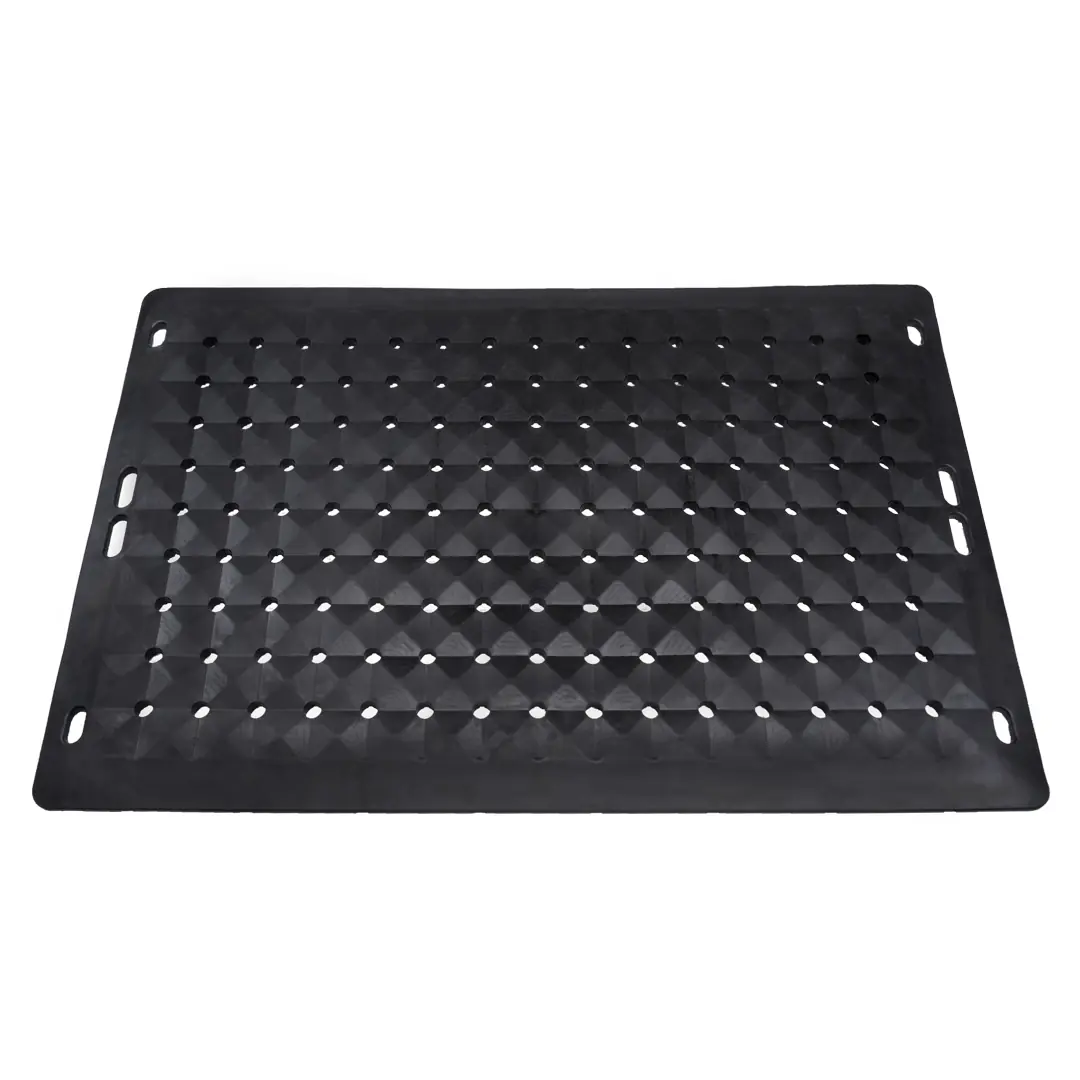
Look for drainage mats with an open-grid or perforated surface that lets liquids flow through and away. Staff stand on a dry, grippy surface while liquids drain to the floor beneath, which can be cleaned at the end of the shift.
Antimicrobial Protection
Pubs and bars handle food and drink. The area behind the bar sees organic matter, sugar from drink spills, and humid conditions — all of which encourage bacterial growth.
Antimicrobial mats have built-in protection that inhibits bacterial growth on the mat surface between deep cleans. This isn’t a substitute for cleaning, but it adds a layer of hygiene that supports your food safety standards.
For pubs serving food (which is most, these days), antimicrobial protection is worth the small uplift in cost.
Connectable Design
Bars aren’t standard sizes. Your mat solution needs to cover your specific bar run, which might be 2 metres or 6 metres. Look for mats that connect edge-to-edge, letting you build continuous coverage to match your layout.
Durability
Pub environments are demanding. Mats need to handle:
- Heavy foot traffic over long shifts
- Exposure to alcohol, cleaning chemicals, and food debris
- Regular lifting for floor cleaning underneath
- The general rough treatment that comes with a busy venue
Industrial-grade materials (PVC, rubber) outperform consumer-grade foam significantly. A good mat should last several years in a pub environment.
Weight and Stability
Lightweight mats slide, bunch, and create trip hazards — especially on wet floors. Look for mats with significant weight (5kg+) that stay put through an entire service without needing adjustment.
What We Recommend
Stand-Safe drainage mats with antimicrobial protection are designed for exactly this use case:
- Drainage surface: Open-grid design lets liquids flow through
- Antimicrobial protection: Built-in bacterial growth inhibition (SS2-AM-B variant at £94.50)
- 20mm cushioning: Industrial-grade anti-fatigue comfort
- Connectable: Link mats with Stand-Safe Connectors (£12.15 each) to cover any bar length
- 6.4kg per mat: Heavy enough to stay put on wet floors
- Easy to clean: Lift and hose down at end of shift
For a standard 3-metre bar run: 3 x antimicrobial drainage mats + 2 connectors = approximately £308. One-time investment, years of use.
If budget is tight, the standard drainage mat (SS2-PRO-B at £81) delivers the same cushioning and drainage without antimicrobial protection.
Where to Place Them
Think about where your staff actually stand:
Behind the main bar
The obvious choice and the highest-impact placement. Cover the full working length with connected mats. This is where your bartenders spend 80%+ of their shift.
At the till/POS station
If you have a fixed till position, a single mat here reduces fatigue for whoever’s taking orders and payments.
Kitchen pass
If your kitchen has a standing pass or expediting station, this position benefits from anti-fatigue matting too. Consider the antimicrobial drainage version for any kitchen-adjacent area.
Cellar/bottle store
Staff who spend time in the cellar changing barrels or restocking stand on concrete. A mat at the main working position helps here too.
How to Introduce Them to Staff
This matters more than you might think. Putting down mats without explanation can feel like a token gesture. Handled well, it demonstrates genuine care for your team.
A few suggestions:
-
Explain why you’re doing it. “We know standing all shift is hard on your body. These mats are used in factories where people stand 8+ hours. We’ve invested in them because your comfort matters.”
-
Ask for feedback after a week. Staff who feel their input matters are more engaged. Most will notice the difference quickly.
-
Include it in recruitment. Mention staff welfare measures in job listings. It differentiates you from pubs that don’t bother.
-
Don’t stop here. Mats are one improvement. Consider shoe allowances, break schedules, and other welfare measures alongside. But mats are the easiest and cheapest place to start.
HSE Considerations
The Health and Safety Executive recognises prolonged standing as a workplace hazard. While there’s no specific regulation mandating anti-fatigue mats, the general duty of care under the Health and Safety at Work Act 1974 requires employers to take reasonably practicable steps to protect employee welfare.
Anti-fatigue matting is considered a reasonably practicable measure for workers who stand for extended periods. If a staff member raises a complaint about standing fatigue and you haven’t taken basic steps to address it, you’re on weak ground.
Drainage mats also contribute to slip risk management — a key concern for any premises serving food and drink. Keeping staff standing surfaces dry is a sensible addition to your existing slip prevention measures.
Common Objections (and Honest Answers)
“My staff haven’t complained.” Most hospitality staff accept discomfort as part of the job. They don’t complain — they just leave when something better comes along. The absence of complaints doesn’t mean the absence of a problem.
“We’ve managed without them for years.” You’ve also had high turnover for years. The cost of doing nothing isn’t zero — it’s just hidden in recruitment bills and sick days.
“They’ll get dirty and look scruffy.” Black industrial mats don’t show dirt the way you’d expect. End-of-shift cleaning (lift, hose, replace) takes minutes. They look functional and professional, not scruffy.
“Can’t we just buy cheap rubber mats?” You can. They’ll slide, won’t provide proper cushioning, and you’ll replace them within a year. Quality anti-fatigue mats are a different product category entirely.
“£300 for mats seems a lot.” It’s less than half the cost of replacing one bartender. And the mats last years.
Getting Started
- Measure your bar run — length in metres behind the bar where staff stand
- Divide by 1.02m (the long edge of a Stand-Safe mat) to get the number of mats needed
- Add connectors — one fewer than the number of mats
- Choose your version — drainage + antimicrobial for food/drink areas, standard for dry positions
Or simply contact us with your bar measurements and we’ll recommend the right configuration and provide a quote.
Request a free sample to feel the quality before committing.
Free site visit
Get a Safe-Flex layout, slip data, and RAMS pack for your floor.
Book a free site visit and we’ll review hazards, measure the area, and specify the right modular matting. UK-manufactured from 100% recycled PVC compound.

Pressed in the West Midlands · 100% recycled PVC